
Tank flush
We drain the tank, flush out loose sediment, and check what comes out. Heavy, hard sediment tells us the tank may be near the end of its life.
Rumbling tank or slow hot water? A flush and anode check clears sediment before it shortens the life of your heater.
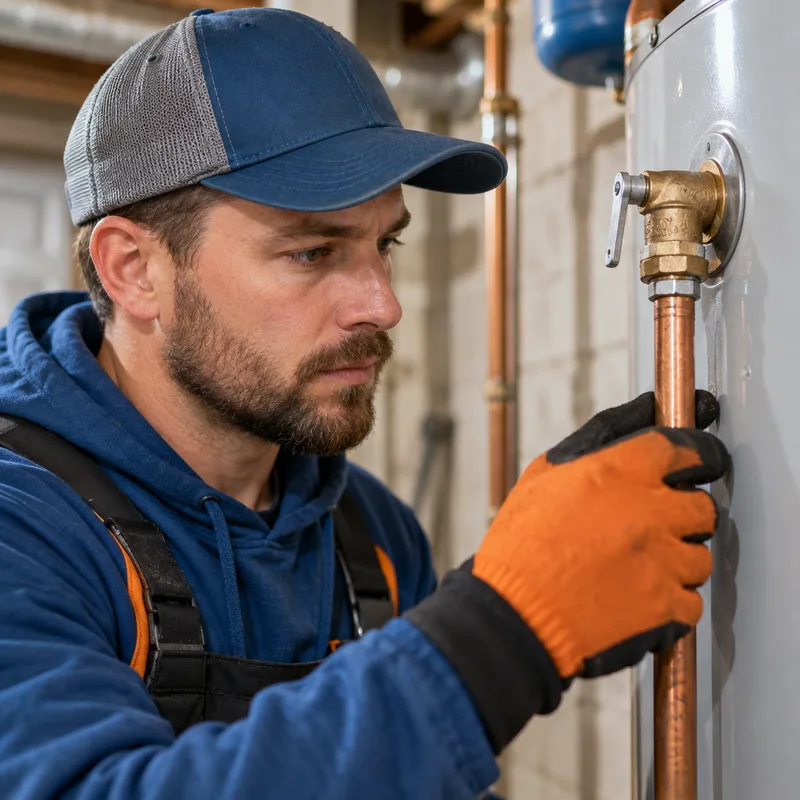
Most water heaters fail slowly. Sediment settles, the anode rod wears away, and a relief valve that never gets tested sticks. A maintenance visit catches those things while they're still cheap to deal with.
We drain and flush the tank, check the anode rod, test the relief valve, and look over the burner and venting on gas units or the elements and wiring on electric units. Tankless units get descaled and their filters and vents checked.
If we find a failing part, we explain it and the price before doing anything. Larger problems are handled through our water heater repair service.
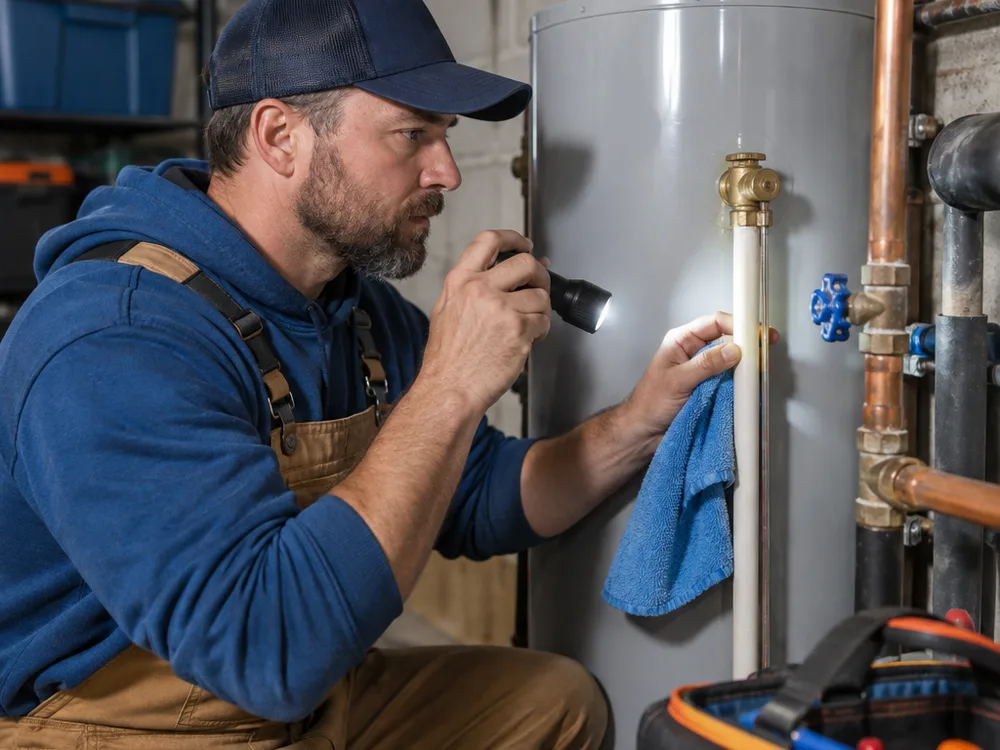
We drain the tank, flush out loose sediment, and check what comes out. Heavy, hard sediment tells us the tank may be near the end of its life.
We inspect the rod and recommend replacing it when it's worn down, before the tank lining starts to rust.
We test the temperature and pressure relief valve and check its discharge pipe, since a stuck valve is a safety risk.
On gas units we look at the burner, pilot or igniter and venting. On electric units we test elements, thermostats and wiring.
We check the temperature setting and, if there's an expansion tank, whether it's still holding its charge.
The City of Lancaster's 2025 water analysis lists hardness of about 16 grains per gallon from its Conestoga plant and about 8 from its Susquehanna plant. In a tank, those minerals drop out as sediment. Sediment insulates the bottom of the tank, makes gas burners work harder, causes the familiar rumbling and popping, and can bury the lower element on electric units.
Regular flushing keeps that layer thin. Paired with anode checks, it's the simplest way to get more years out of a tank, and the same idea applies to descaling a tankless unit.
Many manufacturers recommend flushing once a year. Lancaster homes on the harder end of the water range, larger families and heavier use may benefit from checks more often. After the first visit, we'll suggest a schedule based on how much sediment comes out and how the anode rod looks.
If you're curious about tankless installs and repairs or a new heater, maintenance is a good time to talk it through, since we'll already have a close look at the current setup.
Rumbling or popping from the tank? Call about a flush.
Many manufacturers suggest once a year. With harder water, sediment builds faster, so we may suggest checking more often based on what comes out of the tank.
It's a metal rod inside the tank that corrodes so the tank lining doesn't. Once it's used up, the tank itself starts to rust. Checking it and replacing it when needed can extend tank life.
Often it helps, if the tank is still sound. If the sediment has hardened or the tank is old and corroded, flushing may not solve it, and we'll tell you that.
Yes. Tankless units need descaling to clear minerals from the heat exchanger, plus filter and vent checks.
Some homeowners do, but hot water, old drain valves and gas controls can be risky. If a drain valve hasn't been opened in years, it may not close again, so we bring a replacement just in case.
Tell us the heater's age, whether it's gas, electric or tankless, and anything unusual you've noticed. We'll set up a visit and explain what we find.