Diagnosis that matches the symptoms
We trace the problem from the complaint to the cause, like a tripped breaker, a failed element, a bad thermocouple or restricted airflow at a gas burner. That keeps the work focused and avoids repeat trips.
Serving Lancaster, PA & surrounding areas
No hot water, a leak, or a rumbling tank? We find the real failure and fix it, so you don't pay for guesswork.
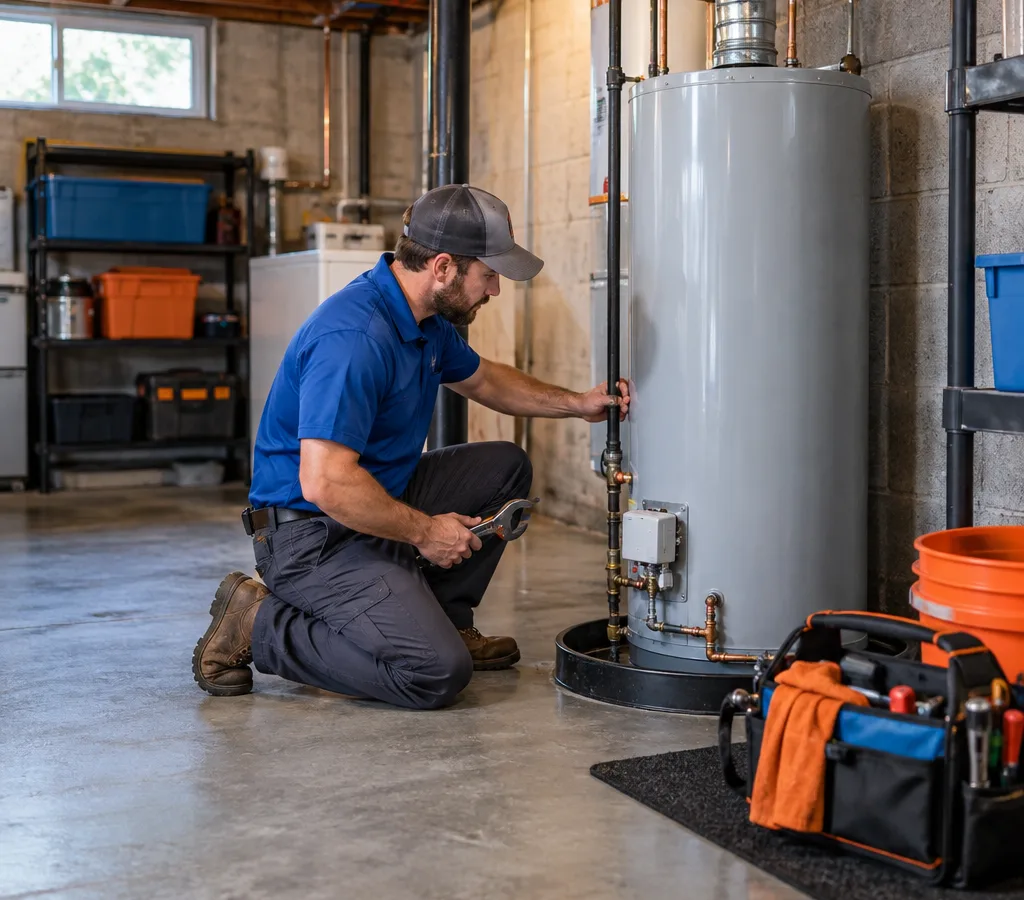
When a water heater quits, you want to know what failed and what it costs to fix. We test before we replace anything, so the work matches the problem.
On electric units that usually means power, elements and thermostats. On gas units we check the pilot or igniter, thermocouple or flame sensor, gas control valve and venting. We also look at the relief valve, drain valve and dip tube, and we tell you plainly if the tank itself is leaking and a repair no longer makes sense.
Calls we handle most often:
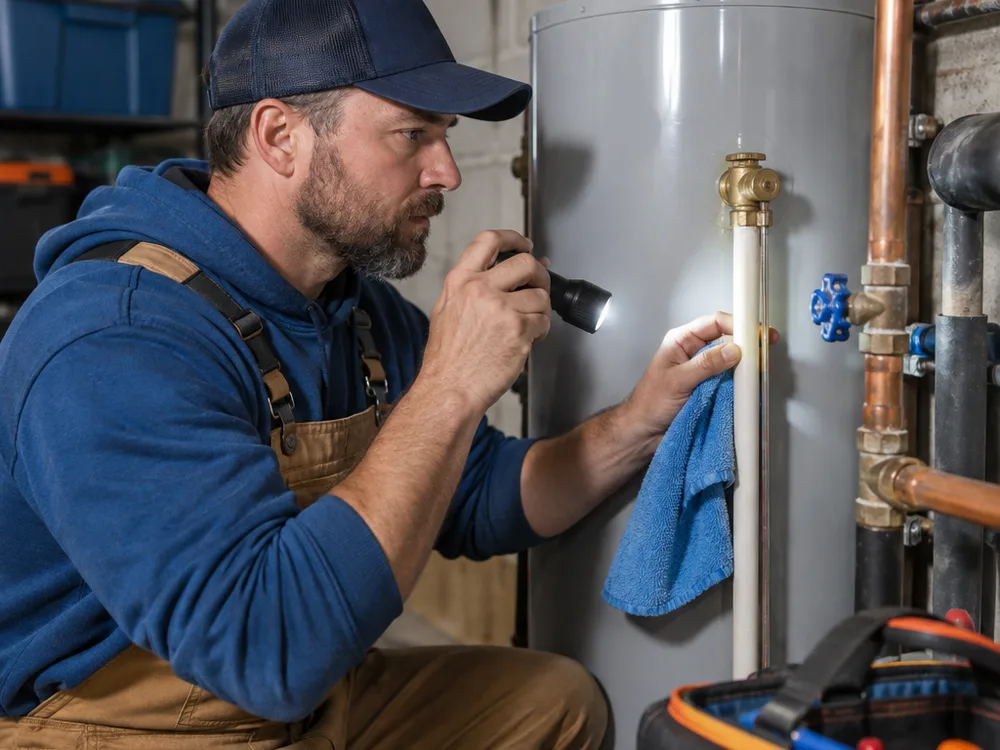
We trace the problem from the complaint to the cause, like a tripped breaker, a failed element, a bad thermocouple or restricted airflow at a gas burner. That keeps the work focused and avoids repeat trips.
Water at the heater can come from a fitting, the drain valve, the relief valve or the tank itself. We isolate the source, check for scalding and pressure risks, then recommend the safe next step.
Rumbling and slow recovery often point to sediment. We check whether a flush will help, test element condition on electric units, and verify burner operation and venting on gas units.
We protect floors, control water during draining, and leave valves and connections neat and reachable. If the unit has to stay off, we label shutoffs and explain what to avoid until it's fixed.
Some failures are worth fixing and some aren't. We explain part availability, tank condition and expected reliability so you can decide with the facts in front of you.
Most repairs run about $175 to $900, depending on the problem and the parts. Smaller fixes like a thermostat, heating element or valve usually land around $175 to $450. Gas control valves, electrical faults and leak-related work can run $450 to $900.
The final price depends on gas or electric, what failed, how easy the unit is to reach, the condition of nearby shutoffs and piping, and whether draining or cleanup is needed. We confirm the exact cost after diagnosing the unit, before any work starts.
When a tank is leaking, badly corroded or simply worn out, we size the right replacement, remove the old unit and test the new one.
Adding a bathroom, moving a heater or switching fuel? We plan and install new units for remodels and upgrades.
Tank-to-tankless conversions, error-code troubleshooting and descaling for on-demand units.
Flushing, anode rod checks and relief valve testing to slow sediment buildup and catch problems early.
Hardness matters for any tank. The City of Lancaster's 2025 water analysis lists about 16 grains per gallon from its Conestoga plant and about 8 from its Susquehanna plant. Those minerals settle in the bottom of a tank as sediment, which is why rumbling, slow recovery and worn anode rods show up so often on our calls.
Many homes here also have tight basement utility corners and older shutoffs or piping. Access and water control matter as much as the repair itself, so we locate the right valves first and leave everything reachable for the next service.
If you're still figuring out what kind of unit you have, our hot water heater guide walks through gas, electric and tankless types and the warning signs for each.
Leaking tank or no hot water? Call before the damage spreads.
We cover the city and the townships around it. Calls come in from every part of town, including these neighborhoods.
In older homes, we isolate the right shutoffs and check draft on gas units before any repair starts.
Compact basements and older venting or gas piping get a careful check so the same failure doesn't come back.
Heater placement and piping vary from house to house, so we plan for access, draining and clean reconnections.
We check recovery rate, thermostat settings and sediment noise when a heater can't keep up with demand.
Leak control comes first. We find the exact leak point and protect the materials around the heater.
Outside the city, we also serve Manheim Township, Lancaster Township, East Hempfield and East Lampeter.
Yes. On electric units we test elements, thermostats and wiring. On gas units we check the pilot or igniter, thermocouple or flame sensor, gas control valve and venting before recommending a fix.
If it's safe, shut off the cold water supply to the tank and turn off the power or set the gas control to off. Then call us so we can find the leak point before more water reaches the floor.
A leaking or badly corroded tank usually means replacement. A failed element, thermostat, valve or burner part can often be repaired, and we tell you which one you're dealing with before any work starts.
That sound usually comes from sediment at the bottom of the tank. With hard water it builds up faster. A flush can help if the tank is still in good shape.
Yes. We also cover Manheim Township, Lancaster Township, and parts of East Hempfield and East Lampeter. Call with your address and we'll confirm.
Tell us whether the heater is gas or electric, what it's doing (no hot water, leaking, noise) and where it sits in the house. A photo of the label helps too.
Tell us what the heater is doing and whether it's gas or electric. We'll explain the safest next step and set up a visit.