
Gas tank
Heats faster and recovers quicker than electric. Needs a working vent, a pilot or igniter, and a gas control valve, all of which we test on service calls.
Not sure what kind of heater you have or whether it's worth fixing? Here's what to check before you call.
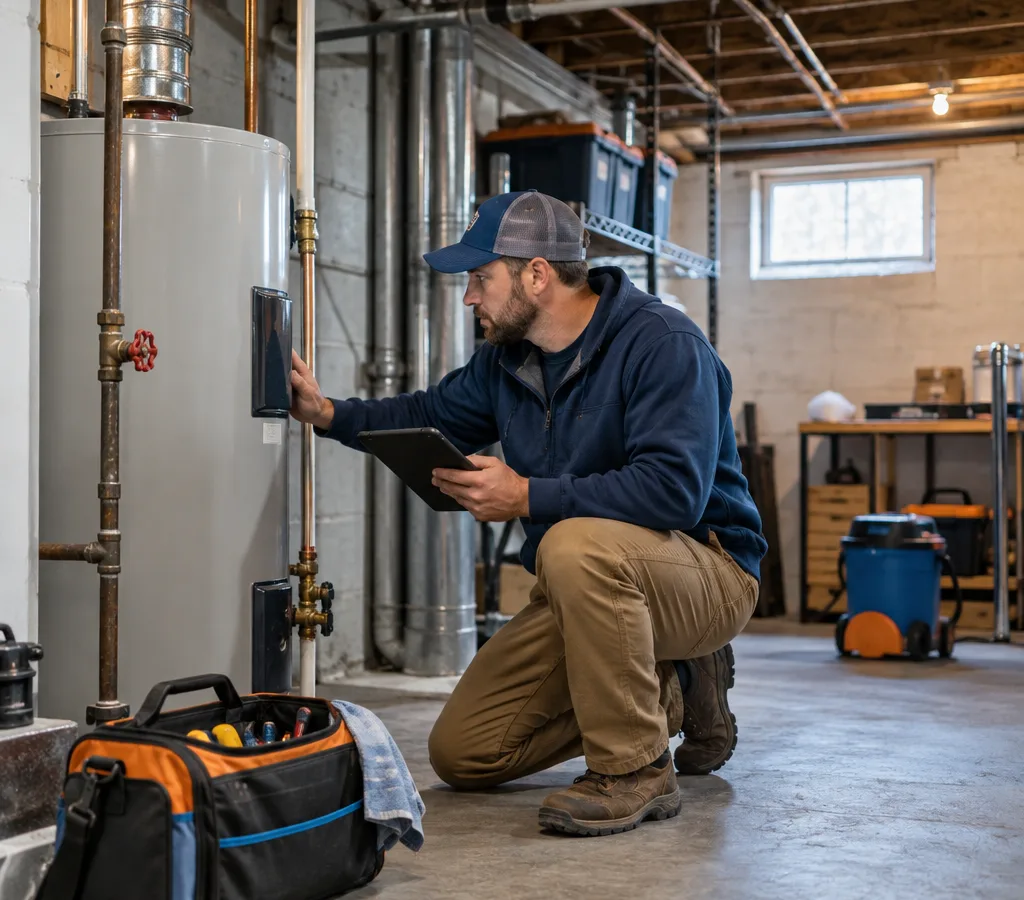
Three details tell you most of what you need to know: the fuel type, the age and the symptom. The fuel type is on the label and is easy to spot. Gas units have a vent pipe on top and a gas line to a control valve, while electric units have a wire running to a cover panel on the side.
The age is usually coded into the serial number on the label. The symptom, such as no hot water, a leak, noise or discolored water, points to which part is involved.
Have those three ready when you call and we can usually tell you what's likely going on before we arrive.
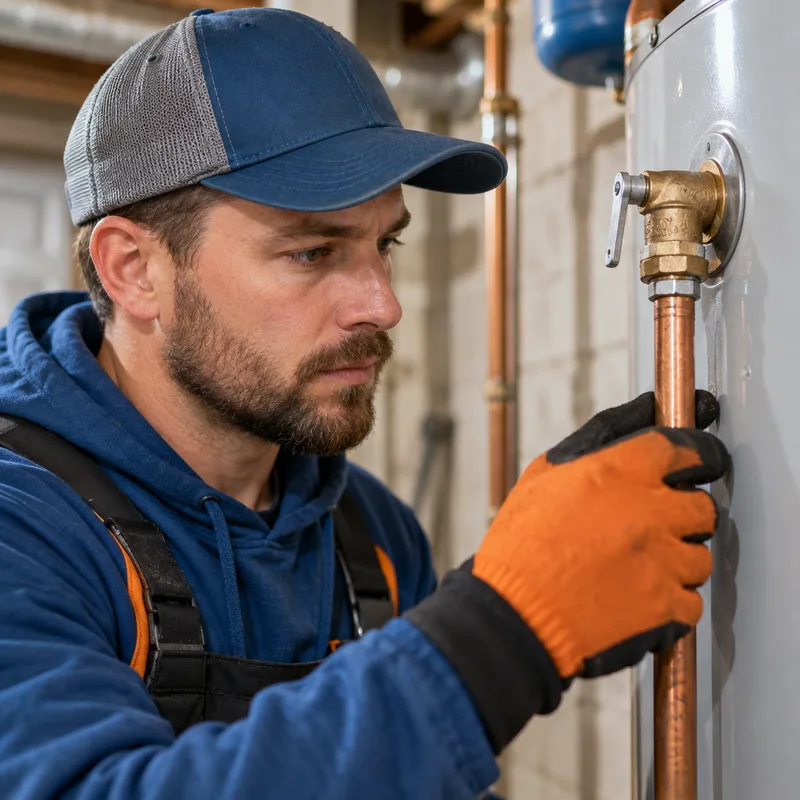
Heats faster and recovers quicker than electric. Needs a working vent, a pilot or igniter, and a gas control valve, all of which we test on service calls.
No venting, but it relies on two heating elements and thermostats. One failed element often means lukewarm water or short showers.
Heats on demand with no storage tank. It needs regular descaling, especially with hard water. Learn about our on-demand water heater service.
If the tank itself is leaking, replacement is usually the safer path because a tank can't be reliably patched. Parts like elements, thermostats and gas valves are covered on our water heater repair Lancaster PA page, and a fix there often restores normal hot water.
When a tank is near the end of its life, our tank replacement service covers the swap. For a sound tank, regular flushing and anode checks help it last longer.
Most repairs run about $175 to $900. A standard tank replacement typically runs $1,200 to $3,500 installed, and tankless installs often run $3,000 to $7,500+. We confirm exact pricing after seeing your unit.
Not sure what's wrong with your heater? Call and describe it.
It depends on water quality, maintenance and use. Hard water and skipped flushes shorten tank life, while regular flushing and anode checks help a tank last longer. The age on the label tells you where yours stands.
It can be the tank itself, a failing drain valve, or water running down from a fitting above. Tracing the leak path tells you whether it's a fixable connection or a failed tank.
Common causes are sediment taking up tank space, a failed lower element on electric units, a broken dip tube, or a thermostat issue. Each has a different fix.
If it's safe to do so, shut off the cold water supply and turn off the power or set the gas control to off, then call us to find the source.
Tell us what your heater is doing and what type you have. We'll explain the likely cause and the next step.